

Surgical Services for Horses
Our surgeon offers a range of equine surgery in Sturgis, including dental, ocular, orthopedic, soft-tissue, and reproductive surgeries.
Most large animal surgeries are easier to perform on standing, awake patients and are typically to repair lacerations and injuries sustained through trauma.
Whenever appropriate, equine surgery is performed standing to reduce the risks associated with general anesthesia and to support the safest possible outcome for the patient.
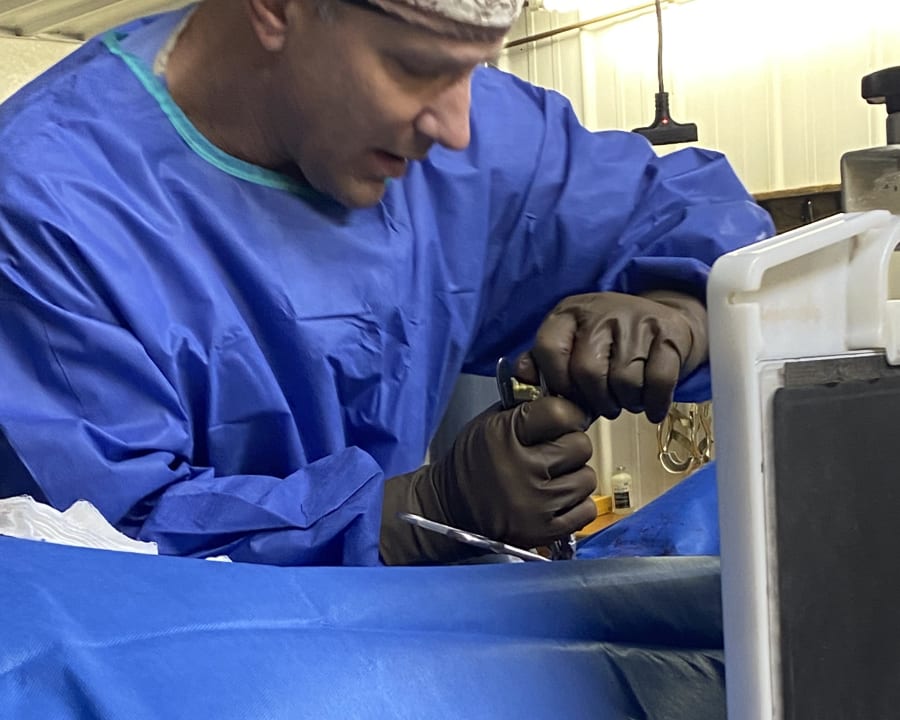
Board Certified Veterinary Surgeon Specializing in Equine Surgery
Our equine surgeon, Dr. Jason Mez, and our team are specially trained to handle the complicated needs of equine surgery. You can trust that we will do everything we can to make the process safe and comfortable for your horse.
Equine Surgical Procedures in Sturgis
Our horse surgeon provides medical and emergency surgeries to help treat diseases or to repair injuries sustained through trauma. These include elective and non-elective surgeries, which are recommended based on what our vets believe to be in the patient's best interest.
Our Sturgis vets routinely perform the following elective and non-elective surgeries:
- Soft Tissue Surgery
Soft tissue surgery includes surgery of the abdomen, urogenital tract, respiratory tract, mouth, and skin.
Colic surgeries are some of the most common soft tissue surgeries performed by equine veterinarians. At Sturgis Veterinary Hospital & Equine Center, we are not currently equipped to perform these delicate procedures. If your horse is experiencing colic or is in need of specialized surgical care, we will refer you to the nearest equine surgical specialist.
- Kissing Spine Surgery
Kissing spine in horses is a condition where the dorsal spinous processes (bony projections from the vertebrae) in the back touch or overlap, causing pain and reduced performance.
The surgery involves either removing parts of these processes to create more space or cutting ligaments between them to reduce pressure and inflammation.
- Dental Surgery
Dental surgeries refer to procedures that affect dental tissues or their supporting structures.
- Ocular Surgery
Eye surgery may be recommended for your horse when necessary, such as with some cases involving corneal ulcer or laceration.
- Orthopedic Surgery
Surgeries used to treat lameness in horses, including injury or disease of the joints, hooves, or tendons.
- Wound Repair
Wounds occur when living tissue has been cut, broken, burnt, torn, or otherwise damaged.
These wounds must be cleaned, disinfected, and appropriately cared for by a qualified veterinarian as soon as possible.
The Surgery Process
We understand that the prospect of equine surgery can be frightening. We always keep you fully informed about why we are recommending a surgical procedure, the length of recovery, and any post-operative care your horse will need at home.
Standing vs. Traditional Surgery
Most large-animal procedures are performed on standing, awake patients, which is ideal for many types of injuries and routine surgeries. Common standing procedures include laceration repair, castration, reproductive surgeries, upper airway endoscopic procedures, and certain minor limb or soft-tissue surgeries.
Standing surgery greatly reduces risk because the recovery from general anesthesia is one of the most significant concerns in equine patients. Whenever possible, standing procedures are recommended to support the safest outcome for the horse.
In situations where a procedure cannot be safely performed standing, our veterinary team will discuss available options and help determine the best course of action for your horse. Our focus is always on minimizing risk and ensuring the safest, most appropriate care based on the individual case.